Monday, November 9, 2015

Assignment-Studio Nude

The female nude – magical, erotic, aesthetic – has been modeled and painted since prehistory. Appearing rarely and awkwardly in the earliest art, she attained fulfillment and glory in ancient Greece. In their idealized treatment of the nude, The Greeks established a standard that only the asceticism of the Middle Ages ignored. The artists of the Renaissance and their successors of the eighteenth and nineteenth centuries revived the nude, and by the 1930’s she was again a conventional form. It was inevitable that she should become a favorite subject of photography. - Peter Lacey


Bring one print to class for critique on November 18.

Model will be supplied during in class shoot on November 9, students may of course photograph a model of their own choosing.

Monday, October 12, 2015

Wednesday, August 26, 2015

Assignment #2 Photograms


Man Ray made his "rayographs" without a camera by placing objects-such as the thumbtacks, coil of wire, and other circular forms used here-directly on a sheet of photosensitized paper and exposing it to light. Man Ray had photographed everyday objects before, but these unique, visionary images immediately put the photographer on par with the avant-garde painters of the day. Hovering between the abstract and the representational, the rayographs revealed a new way of seeing that delighted the Dadaist poets who championed his work, and that pointed the way to the dreamlike visions of the Surrealist writers and painters who followed. 
Today, we generally call these types of images, "photograms".


In this assignment you will bring three objects to class, a transparent, a translucent and an opaque one, all sized to fit on a piece of 8x10 paper.


Monday, August 24, 2015

Assignment #1

Black & White photography is different from color photography from both an obvious visual approach but also from a more conceptual understanding. With the exception of a few who are color blind, we all see and understand the world in color. To make black & white images requires that you make the translation in your head as your shooting.

For this assignment shoot one roll of 36 exposure HP-5 or similar film with the goal of making images where it matters that the image is mono toned and not in color. As part of this assignment, you will be testing your camera, film and development using the Zone system. To this end, set camera ISO at 400, take a photo of your gray card, then make a second exposure 4 stops less. Set your camera to ISO 200, repeat, set your camera to ISO 100 repeat.

Bring the exposed film to class for in class processing January 20.


First Day of Class!


Tuesday, June 16, 2015

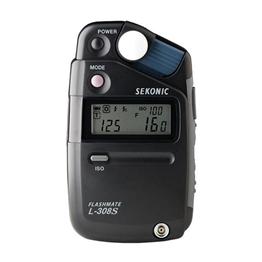
Sunny 16 Rule Explained (and yes, you still need to buy a light meter)


In photography, the sunny 16 rule (also known as the sunny f/16 rule) is a method of estimating correct daylight exposures without a light meter. (For lunar photography there is a similar rule known as the looney 11 rule.) Apart from the obvious advantage of independence from a light meter, the sunny 16 rule can also aid in achieving correct exposure of difficult subjects. As the rule is based on incident light, rather than reflected light as with most camera light meters, very bright or very dark subjects are compensated for. The rule serves as a mnemonic for the camera settings obtained on a sunny day using the exposure value (EV) system.
The basic rule is, "On a sunny day set aperture to f/16 and shutter speed to the [reciprocal of the] ISO film speed [or ISO setting] for a subject in direct sunlight."[1] For example:
  • On a sunny day and with ISO 100 film / setting in the camera, one sets the aperture to f/16 and the shutter speed to 1/100 or 1/125 second (on some cameras 1/125 second is the available setting nearest to 1/100 second).
  • On a sunny day with ISO 200 film / setting and aperture at f/16, set shutter speed to 1/200 or 1/250.
  • On a sunny day with ISO 400 film / setting and aperture at f/16, set shutter speed to 1/400 or 1/500.
As with other light readings, shutter speed can be changed as long as the f-number is altered to compensate, e.g. 1/250 second at f/11 gives equivalent exposure to 1/125 second at f/16. More in general, the adjustment is done such that for each step in aperture increase (i.e., decreasing the f-number), the exposure time has to be halved (or equivalently, the shutter speed doubled), and vice versa. This follows the more general rule derived from the mathematical relationship between aperture and exposure time—within reasonable ranges, exposure is proportional to the square of the aperture ratio and proportional to exposure time; thus, to maintain a constant level of exposure, a change in aperture by a factor c requires a change in exposure time by a factor 1/c2 and vice versa. Steps in the aperture always correspond to a factor close to the square root of 2, thus the above rule.
An elaborated form of the sunny 16 rule is to set shutter speed nearest to the reciprocal of the ISO film speed / setting and f-number according to this table:[2][3]
ApertureLighting conditionsShadow detail
f/22Snow/sandDark with sharp edges
f/16SunnyDistinct
f/11Slight overcastSoft around edges
f/8OvercastBarely visible
f/5.6Heavy overcastNo shadows
f/4Open shade/sunsetNo shadows
Add one stopBacklightingn/a

Monday, March 23, 2015

Assignment #8 Studio nude

The female nude – magical, erotic, aesthetic – has been modeled and painted since prehistory. Appearing rarely and awkwardly in the earliest art, she attained fulfillment and glory in ancient Greece. In their idealized treatment of the nude, The Greeks established a standard that only the asceticism of the Middle Ages ignored. The artists of the Renaissance and their successors of the eighteenth and nineteenth centuries revived the nude, and by the 1930’s she was again a conventional form. It was inevitable that she should become a favorite subject of photography. - Peter Lacey


Bring one print to class for critique on April 9

Model will be supplied during in class shoot on March 26, students may of course photograph a model of their own choosing.