Monday, August 24, 2015

Assignment #1

Black & White photography is different from color photography from both an obvious visual approach but also from a more conceptual understanding. With the exception of a few who are color blind, we all see and understand the world in color. To make black & white images requires that you make the translation in your head as your shooting.

For this assignment shoot one roll of 36 exposure HP-5 or similar film with the goal of making images where it matters that the image is mono toned and not in color. As part of this assignment, you will be testing your camera, film and development using the Zone system. To this end, set camera ISO at 400, take a photo of your gray card, then make a second exposure 4 stops less. Set your camera to ISO 200, repeat, set your camera to ISO 100 repeat.

Bring the exposed film to class for in class processing January 20.


First Day of Class!


Tuesday, June 16, 2015

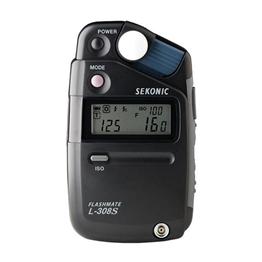
Sunny 16 Rule Explained (and yes, you still need to buy a light meter)


In photography, the sunny 16 rule (also known as the sunny f/16 rule) is a method of estimating correct daylight exposures without a light meter. (For lunar photography there is a similar rule known as the looney 11 rule.) Apart from the obvious advantage of independence from a light meter, the sunny 16 rule can also aid in achieving correct exposure of difficult subjects. As the rule is based on incident light, rather than reflected light as with most camera light meters, very bright or very dark subjects are compensated for. The rule serves as a mnemonic for the camera settings obtained on a sunny day using the exposure value (EV) system.
The basic rule is, "On a sunny day set aperture to f/16 and shutter speed to the [reciprocal of the] ISO film speed [or ISO setting] for a subject in direct sunlight."[1] For example:
  • On a sunny day and with ISO 100 film / setting in the camera, one sets the aperture to f/16 and the shutter speed to 1/100 or 1/125 second (on some cameras 1/125 second is the available setting nearest to 1/100 second).
  • On a sunny day with ISO 200 film / setting and aperture at f/16, set shutter speed to 1/200 or 1/250.
  • On a sunny day with ISO 400 film / setting and aperture at f/16, set shutter speed to 1/400 or 1/500.
As with other light readings, shutter speed can be changed as long as the f-number is altered to compensate, e.g. 1/250 second at f/11 gives equivalent exposure to 1/125 second at f/16. More in general, the adjustment is done such that for each step in aperture increase (i.e., decreasing the f-number), the exposure time has to be halved (or equivalently, the shutter speed doubled), and vice versa. This follows the more general rule derived from the mathematical relationship between aperture and exposure time—within reasonable ranges, exposure is proportional to the square of the aperture ratio and proportional to exposure time; thus, to maintain a constant level of exposure, a change in aperture by a factor c requires a change in exposure time by a factor 1/c2 and vice versa. Steps in the aperture always correspond to a factor close to the square root of 2, thus the above rule.
An elaborated form of the sunny 16 rule is to set shutter speed nearest to the reciprocal of the ISO film speed / setting and f-number according to this table:[2][3]
ApertureLighting conditionsShadow detail
f/22Snow/sandDark with sharp edges
f/16SunnyDistinct
f/11Slight overcastSoft around edges
f/8OvercastBarely visible
f/5.6Heavy overcastNo shadows
f/4Open shade/sunsetNo shadows
Add one stopBacklightingn/a

Monday, March 23, 2015

Assignment #8 Studio nude

The female nude – magical, erotic, aesthetic – has been modeled and painted since prehistory. Appearing rarely and awkwardly in the earliest art, she attained fulfillment and glory in ancient Greece. In their idealized treatment of the nude, The Greeks established a standard that only the asceticism of the Middle Ages ignored. The artists of the Renaissance and their successors of the eighteenth and nineteenth centuries revived the nude, and by the 1930’s she was again a conventional form. It was inevitable that she should become a favorite subject of photography. Peter Lacey


Bring one print to class for critique on April 9

Model will be supplied during in class shoot on March 26, students may of course photograph a model of their own choosing.

Thursday, February 26, 2015

Assignment #7 Studio portrait

Photography can be an additive practice as we have discussed in class, but no where is this more evident than the lighting studio. You begin with a black room, add a back ground, set lights, determine  camera angle and lastly choose a subject.

In this assignment you will enlist the help of a human subject, no younger than 14 years old and photograph them under controlled lighting conditions in the lighting studio. Pay attention to direction of main and fill lights and ratio between each source. In the studio, everything matters.

Richard Avedon

Artists to research are: Karsh, Avedon, Halsman, Leibovitz, Scavullo and Penn.

Crit date April 2

Thursday, February 5, 2015

Assignment #3-Audio as inspiration for the visual

In this assignment, you will use a song by Tom Waits as your guide to making a photographic response to a very visual, audio, experience. I have selected a song from his album "Rain Dogs" for this assignment, Ninth and Hennepin. The goal of this assignment is not to literally reproduce the song as a photograph but to use the audio work as a point of departure. You can find this in iTunes or other on line sources. Here's a note that might assist you:

  • In a 1985 interview with Spin magazine, Tom states that the imagery found in this song is drawn mostly from his observations of New York, though the actual named location - Ninth Street and Hennepin Avenue - is in Minneapolis. The location "Ninth and Hennepin" understandably stuck with Waits because he was in an all-night donut shop when he was caught in the middle of a pimp war that involved live ammunition firing into his booth. Tom alludes to this with the line, "All the donuts have names like prostitutes."
  • In support of the album's lyrical themes, "Ninth and Hennepin" is presented as a place of transition, not a home or a destination of any kind. The lyric says of the song's characters: "They all started out with bad directions." The broken umbrellas symbolize failed attempts at shelter by the corner's inhabitants.
  • More symbols of travel and rootlessness found in this lyric: the smell of diesel, horses, the evening train, being lost.


Sunday, February 1, 2015

Assignment #4 Environmental portrait

“The subject must be thought of in terms of the 20th century, of houses he lives in and places he works, in terms of the kind of light the windows in these places let through and by which we see him every day.”


                                       "Willie The Lion Smith"  by Arnold Newman 1960
 Simply put, an environmental portrait is a portrait of a person that includes enough of the environment around that person to provide context that helps the viewer understand more about the defining characteristics of the subject.  One of the keys to a successful environmental portrait is that the portion of the scene included in the frame should be "representative" of the environment or context you want the viewer to associate with the subject.  The relative importance of the subject to the environment is also important in defining an "environmental portrait."  The subject should be the most prominent element in the scene, with the surrounding elements providing strong supporting context.  If you are too close to your subject to include enough of the environment, then the image simply becomes a normal portrait.  On the other hand, if the subject is so small in the frame that other elements become more prominent, or viewers cannot discern the defining characteristics of the subject, then the image would be better classified as something other than an environmental portrait.

"Baker" August Sander

Shoot a minimum of 50 images/frames. You can shoot this assignment at a number of locations and even on different days. The subject must be part of the process and may include others, no candid photos of random people you have not met however! No animals or no humans under the age of 14 year as primary subject matter.

Submit one print, any size for in class critique on March 17